
3D for surface materials manufacturers
Materials and surfaces in 3D: the same slab, plank or panel shown in a room at real scale, captured from the physical material and published with a spec sheet. Architects choose with grain and joint in front of them, not from a 10 × 10 sample.
What showing a material in 3D actually means
It means building the collection with its scale, grain and joint, and showing it in a room where it can be compared. The material is captured from the original or modelled, lit as it would be on site, and published with a spec sheet. The physical sample remains the final reference.
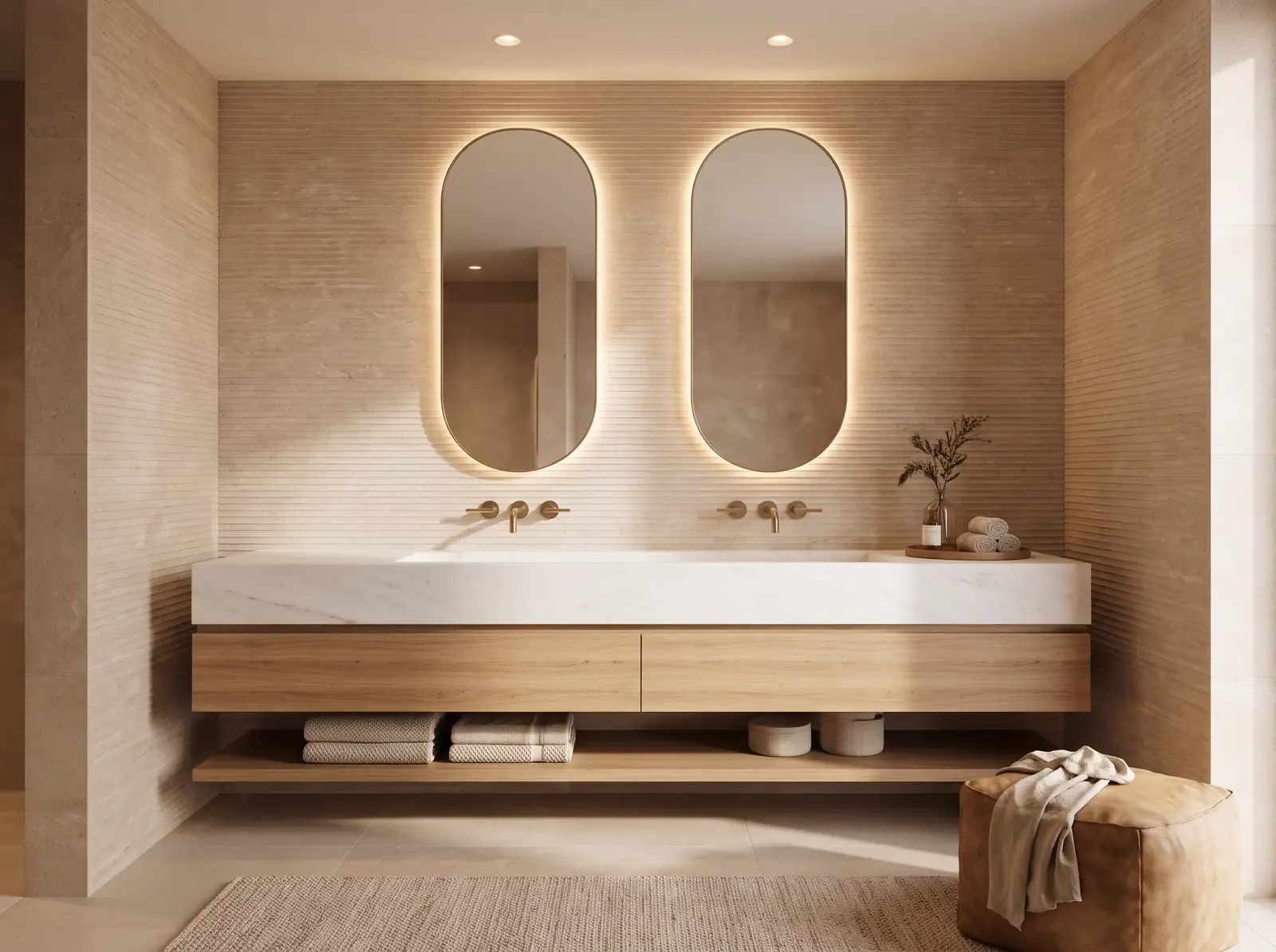
When 3D pays off in materials
It pays off when a small sample cannot explain the product, when every collection needs a new set and a sample shipment, and when specifiers ask for context, sheets and downloads. Also when the material does not exist in physical form yet.
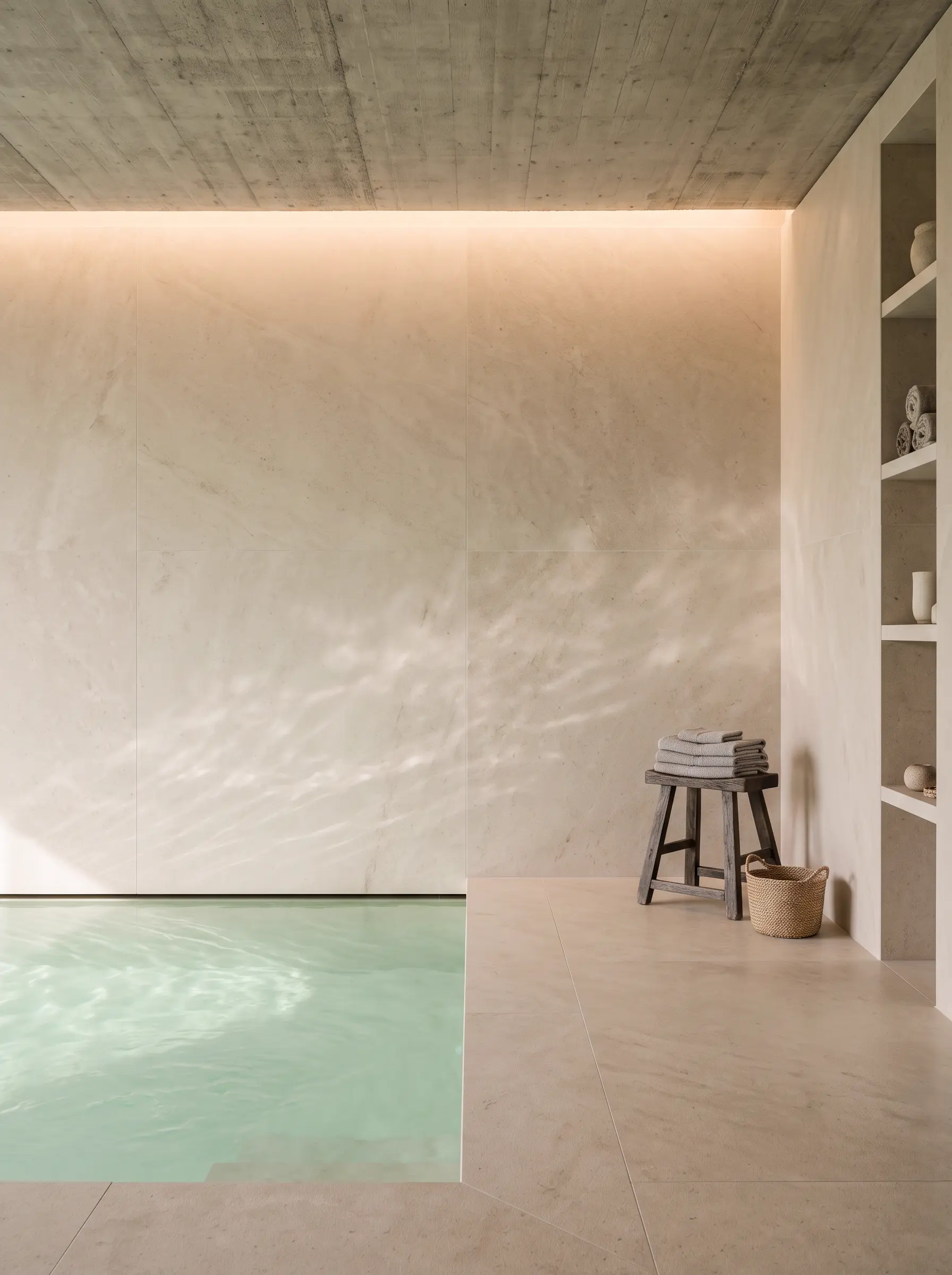
Sample, interior photo, render or real capture
A sample gives touch and colour in the hand. An interior photo gives art direction already decided. A render controls scale, joint and light. A real capture reproduces the exact grain. Knowing which you need stops you paying for a set around a material that does not exist yet.
| Criterion | Physical sample | Interior photo | 3D render | Real capture |
|---|---|---|---|---|
| What it shows | Colour and touch in the hand | A room already styled | The material at scale | The original material, navigable |
| Cost per collection | Sample production and shipping | Set, props and retouching | Modelling and rendering | One capture and its processing |
| Scale and repeat | Limited to the sample size | Depends on framing | Controlled in the model | True to the original |
| When it fits | Final validation and touch | Campaigns with art direction | Catalogue and specification | Material impossible to model |
From collection to showroom in four steps
The work runs by collection and format. First we settle what is shown and in which finishes, then the material arrives — captured or modelled —, then light and scale, and finally publication with a sheet.
- 01
We order the collection
Formats, finishes and thicknesses to be shown. From that list comes what gets captured, what gets modelled and what stays on the sheet.
- 02
We capture or model
A real slab is captured with gaussian splatting; a plank that does not exist yet is built from drawings. Each piece keeps its reference.
- 03
We build rooms at scale
Floors, walls and junctions at real dimensions, coherent lighting and several cameras. Joint and repeat are shown.
- 04
We publish with the sheet
A showroom for specifiers, a format configurator and an image gallery on one base. The code and models are yours.
Frequently asked questions
How much does it cost to take a materials collection into 3D?
It depends on the formats and finishes, whether the material is captured or modelled, the number of rooms and the integration with your site. After a 30-minute call we send a proposal with fixed scope and price.
Can a render mislead about the real colour?
It can, if the material is invented. We start from photographs and measurements, with calibrated PBR materials, and we say it plainly: every screen and every light changes perception. For the final decision the physical sample is still the reference.
Can you capture a real material?
Yes, with gaussian splatting. It works best on matte or structured finishes; mirror polish, glass and thin pieces are its weak point, and there we propose a render. A capture is not for measuring or for certifying technical properties.
Does it work for architects and specifiers?
Yes. The B2B showroom holds the collection with sheets, formats, finishes and downloads, with access for practices and distributors. Materials can be compared in the same room, and a quote requested from the product sheet.
Can you show joints and laying patterns?
Yes, where the pattern is part of the collection rules. Straight, herringbone, stacked or half-piece bond are built on the model at real scale. Where installation depends on the site, we say so and leave it out.